
In August 2026, we conducted some interviews with students and graduates from ACES. Please enjoy here the summaries!
Interviews with students
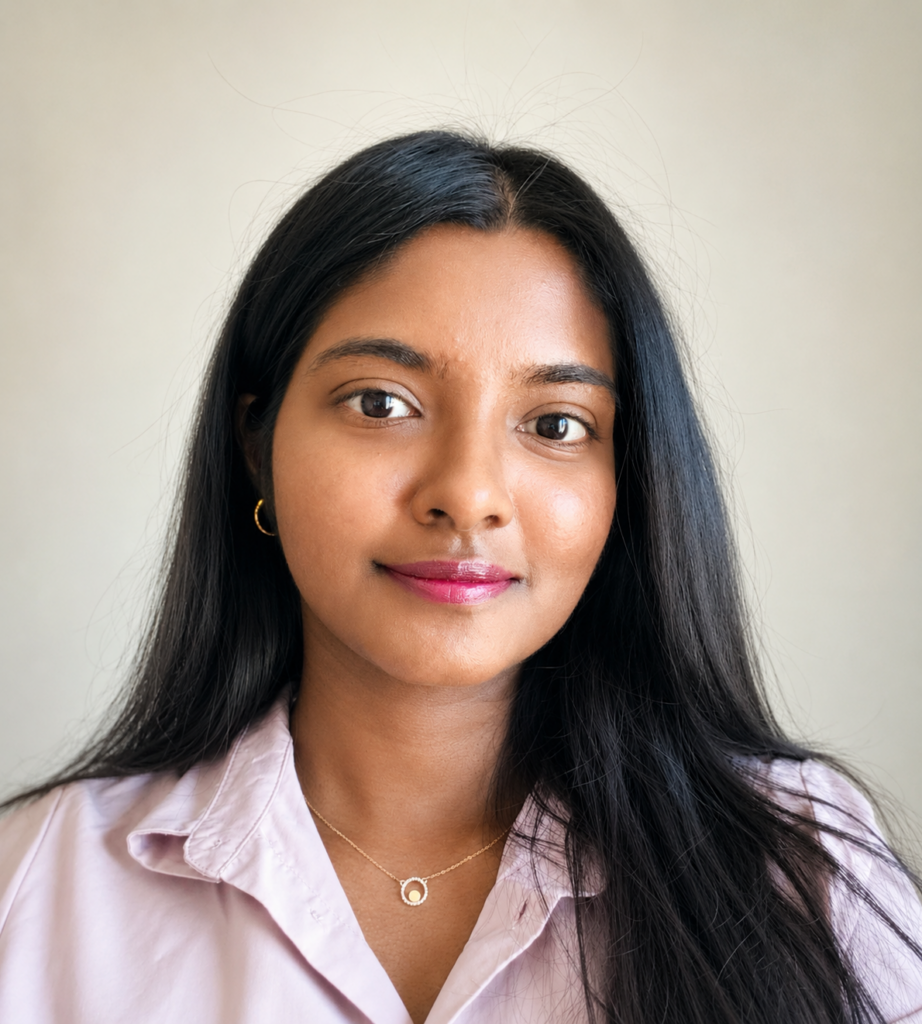
Beulah, Master student ACES
| Picture Source: private
- Why did you choose FAU specifically, and what did you expect?
FAU has a long tradition in physics and engineering, producing people like Georg Simon Ohm (of the famous Ohm’s law), and I felt privileged when offered a chance to study here. Coming from Electronics and Communication, I was looking for a mix of mechanical, AI and electronics, driven by my interest in autonomous driving. ACES delivered exactly that. As a research university, I expected FAU to be a place where innovation is the norm. - How have your courses matched — or surprised — your expectations?
The teaching is application-oriented, which is a little different from what I am used to but in a good way. The professors genuinely know their field, and that comes through in how they teach. - What was the most challenging part of settling in, and what helped?
The initial months were hard, the new culture, language, and everything being unfamiliar at once. What helped was people, fellow students going through the same thing, the church community, and events at the university. And Erlangen stopped feeling foreign and started feeling like home. - Which opportunities at FAU have made the biggest difference?
The research project and internship built into the program. They give real exposure to where the technology is actually going. That practical grounding has broadened what feels possible for my career here. - How do you see your time at FAU influencing your future plans?
My project thesis sits at the intersection of AI and sustainability data, and working on it has sharpened what kind of engineer I want to be. FAU has given both the technical grounding and the contacts to make that realistic. - Would you recommend ACES to other international students?
Yes. If you have an engineering background and an interest in this field, I’d say; go for it. - What else do you want to tell prospective students?
The adjustment is real, and it’s normal to struggle with it at first but it passes faster than you think.
Interviews with graduates
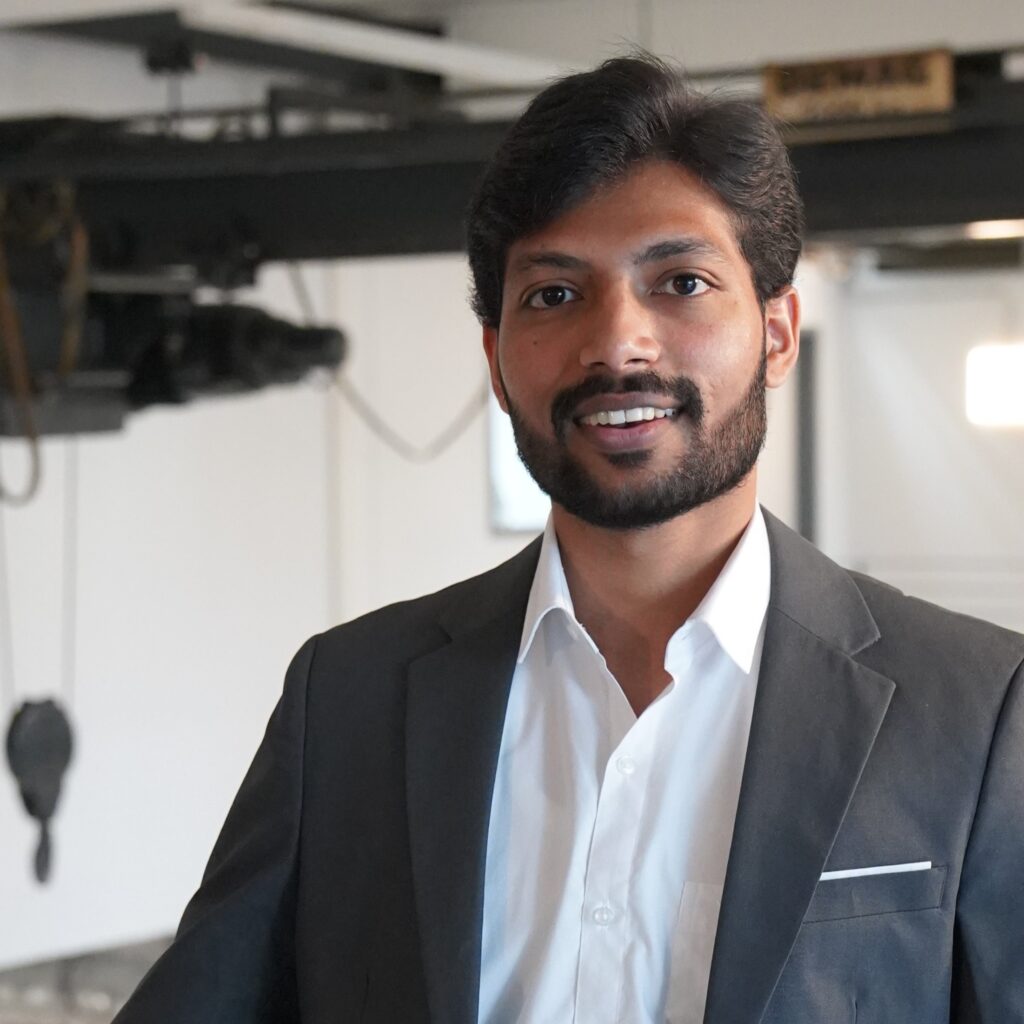
Pavan Savitha Manchegowda, M.Sc.
Graduate ACES, scientific assistant and PhD candidate at FAU, institute of ressource and energy efficient production systems (REP), see also: https://www.rep.tf.fau.de/faudir/pavan-kumar-savitha-manchegowda/
| Picture Source: FAU REP
- Why did you choose FAU specifically, and what did you expect your experience to be like there?
The fact that FAU is located in Bavaria’s diverse industrial and academic landscape was one of the main reasons I decided to study here. I expected a steep learning curve, along with numerous opportunities to gain practical knowledge and engage with the industries in the region. - What was the most challenging part of settling in at FAU (language, paperwork, finding housing, course registration, etc.), and what helped you handle it?
The initial days of adapting to a new culture, both academically and in everyday life, were challenging, especially during the first semester. However, the orientation programmes and regular seminars on adapting to the local culture, basic German etiquette, and everyday life helped me a lot as a newcomer. - What opportunities at FAU have made the biggest difference for you (student groups, research projects, career services, internships, exchange options)?
While at FAU I had the opportunity to involve myself in numerous student groups which helped me navigate the some difficulties during the studies. These student groups organized regular industry visits, Hiking and casual meet-up sessions which made the environment more relaxed and helped in positive networking. - After graduating at FAU, you achieved a job as scientific assistant and PhD candidate at the institute of ressource and energy efficient production machines at FAU. How did you get this job, what are your research topics and how do you like your work?
During my studies, I had the opportunity to take up a full time internship with Schaeffler which continued as a master thesis position in co-ordination with the REP research group at FAU. Having focussed on manufacturing digitalization and sustainability throughout my ACES studies, I developed keen interest to continue my research in this domain after my master studies. At this point, I got the opportunity to continue in this research direction with the production systems working group at FAU’s REP chair. My research focuses on the Digitalization of production and shop floor, and the development of tools for sustainability management. I really enjoy working on these topics along with academic teaching and mentoring. - Are their other international scientific assistants at your or other institutes and do you work together with them? Is there a kind of “international community”?
There are colleagues at the chair from multiple nationalities which gives me a varied exposure in terms of their research methodologies and culture. - Would you recommend your master study program ACES to other international students?
For anyone considering pursuing their master’s studies in ACES, I would say that the program offers a great deal of flexibility. You have the freedom to choose your subjects and modules according to your interests, allowing you to shape your studies in the direction you want to take your career—whether that is in industry or academia. - What else do you want to tell prospective students?
For prospective students at FAU, I would like to say that there are endless opportunities if you are open to exploring them. Studying at FAU gives you a truly diverse and multicultural experience, thanks to its strong international community as well as the wide range of industries and career opportunities available in the Erlangen–Nürnberg metropolitan region. It is a great environment to learn, grow, build connections, and discover new possibilities for your future.

Tanish Patel, M.Sc.
Graduate ACES, currently scientific assistant and PhD candidate at TU Eindhoven, Netherlands
Picture: Tanish Patel (right) with FAU president Prof. Dr.-Ing. Joachim Hornegger (left)
| Picture Source: private
- Why did you choose FAU specifically, and what did you expect your experience to be like there?
I had admission offers from several universities, including TUM and TH Ingolstadt, but the ACES programme at FAU stood out to me because of its structure. I really liked the flexibility to choose between different specialisations within electromobility, rather than following only one fixed path. With my Mechanical Engineering background and my interest in the future of mobility, it felt like a very good fit. Studying in Germany had also been a childhood dream of mine, so joining the very first ACES cohort in Winter Semester 2022 was particularly special. I eventually became the first student from this study program to graduate, that was in January 2025. - What was the most challenging part of settling in at FAU (language, paperwork, finding housing, course registration, etc.), and what helped you handle it?
Moving to Germany and starting a Master’s in a completely new environment was challenging, especially in the beginning. Learning the German language helped me a lot, not only with everyday life but also with feeling more connected to the people around me. I made some good German friends who helped me improve my language skills and at the same time I really enjoyed the social life and cultural experiences that came with it. Overall, learning to be independent, asking for help when needed and being open to new people helped me settle in. - What opportunities at FAU have made the biggest difference for you (student groups, research projects, career services, internships, exchange options)?
FAU offered me many opportunities beyond the classroom. Being involved in student groups helped me academically, while I also had the opportunity to work on different research projects and gain practical experience. FAU’s strong collaborations with industry partners in the region were particularly valuable for me, as they helped me understand how academic knowledge is applied to real engineering problems. These experiences eventually played an important role in shaping my interest in research and my career direction. - After graduating at FAU, you achieved a job as scientific assistant and PhD candidate at TU Eindhoven. How did you get this job, what are your research topics and how do you like your work?
After graduating from FAU, I first worked as a Scientific Assistant at FAPS and subsequently started my PhD at TU Eindhoven (TU/e) in the field of advanced packaging and reliability of high-power semiconductor devices. I found these opportunities largely through the professional network I built during my time at FAU, which I think was one of the most valuable outcomes of the programme. I really enjoy my work, especially the feeling that the research I am doing can contribute to solving real engineering challenges and ultimately make a difference. - Are there other international scientific assistants at your or other institutes and do you work together with them? Is there a kind of “international community”?
Yes, research environments are highly international and I have worked alongside people from different countries and academic backgrounds. I really value this because everyone brings different perspectives and approaches to a problem. As an international student myself, being part of such an environment also made adapting to a new country easier. It creates a strong sense of an international academic community. - Would you recommend your master study program ACES to other international students?
Absolutely. I really like the structure of ACES because it gives students flexibility to shape their studies according to their interests while still providing a broad understanding of electromobility. The interdisciplinary nature of the programme also allows you to see how different areas of mobility come together. For me, the combination of academic learning, research opportunities and industry exposure was particularly valuable. I would definitely recommend ACES to international students who want both a strong technical education and an international experience. - What else do you want to tell prospective students?
I would tell prospective students not to be afraid of taking a path that feels uncertain at first. I came to Germany because studying here had been a childhood dream and I could not have predicted where that first step would eventually take me. There were challenges and setbacks along the way, but each experience helped me grow. My advice would be to stay curious, make use of the opportunities around you and keep moving forward, even when the path is not completely clear.